
You’ve probably noticed hard, thick skin on your feet or hands at some point, but do you know what really causes corns and calluses? These common issues result from repeated pressure or friction, yet they differ in appearance and discomfort sports podiatrist. Understanding how they develop and what triggers them can help you manage or even prevent them. But what exactly sets corns apart from calluses, and what steps should you take when they become painful?
What Are Corns and Calluses?
Although you mightn’t always notice them right away, corns and calluses form as your skin’s natural response to repeated pressure or friction. They act like your body’s built-in shield, toughening up areas that face constant stress.
Corns usually appear as small https://peoplepodiatry.com.au/, round, and hardened spots, often on your toes, while calluses cover broader areas like the soles of your feet or palms. Both protect you by thickening the skin to prevent injury, but they can become uncomfortable if left unchecked.
Understanding these protective layers helps you appreciate how your body works to keep you moving freely. You don’t have to let corns or calluses limit your steps; recognizing them is the first step toward maintaining your freedom of movement.
How Corns and Calluses Develop
Your body creates corns and calluses as a direct response to repeated pressure or friction on specific areas of your skin. When your skin experiences constant rubbing or pressing, it thickens to protect underlying tissues. This protective layer builds up over time, forming hardened spots that shield your feet or hands from damage.
Corns usually develop on smaller, more sensitive areas, while calluses form in broader regions where pressure spreads out. This natural defense mechanism helps you keep moving freely, preventing painful injuries.
However, these thickened areas can become uncomfortable if they grow too large or hard. Understanding this process empowers you to manage and prevent corns and calluses, so you can maintain your freedom to walk, run, or work without unnecessary pain or restrictions.
Causes and Risk Factors for Corns and Calluses
Because repeated pressure and friction trigger corns and calluses, certain activities and conditions increase your risk of developing them.
Wearing tight or poorly fitting shoes can restrict movement and create constant rubbing on your skin.
If you spend a lot of time on your feet, like standing or walking for long periods, you’re more prone to these thickened areas.
Foot deformities, such as bunions or hammertoes, also change how weight distributes, leading to extra pressure points.
You might notice corns or calluses if you regularly use tools or sports equipment that press against your hands or feet.
Even your gait or walking style can cause uneven pressure, creating hot spots.
Understanding these causes helps you take control and protect your skin, so you stay free to move comfortably.
How to Tell Corns From Calluses
How can you easily spot the difference between corns and calluses?
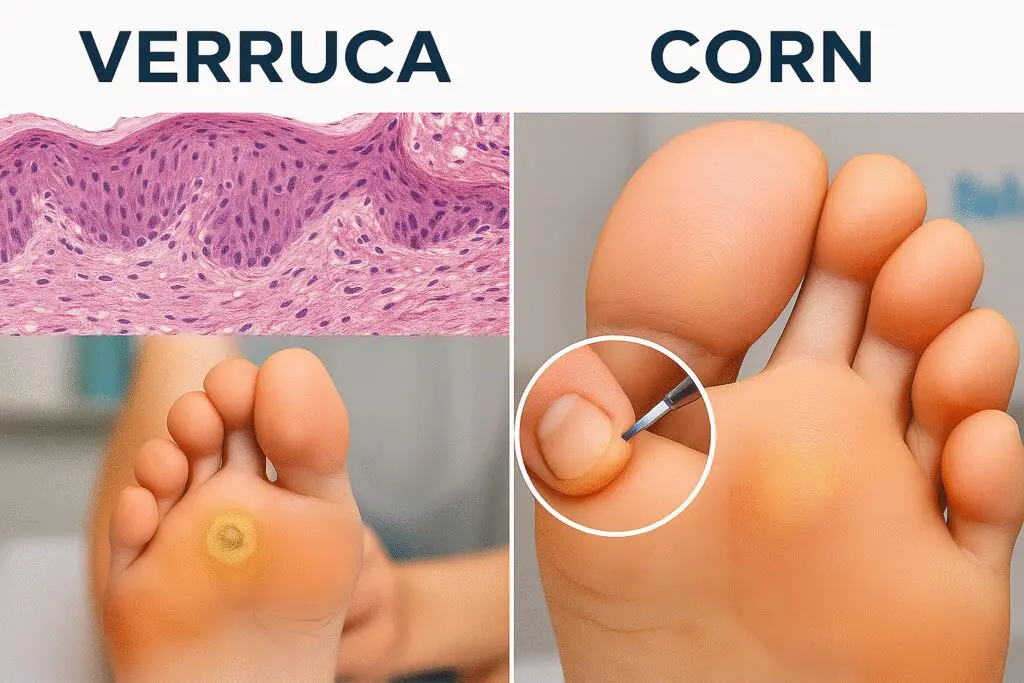
Corns usually appear as small, round, and hard bumps, often with a central core. They tend to form on the tops or sides of your toes, where pressure or friction is focused.
Calluses, on the other hand, are larger, thicker patches of hardened skin that develop on weight-bearing areas like the soles of your feet or the palms of your hands. You’ll notice calluses feel rough and uneven but lack the defined center corns have.
While corns can be painful when pressed, calluses usually don’t cause discomfort. Understanding these distinctions helps you recognize which one you’re dealing with, so you can make informed choices about caring for your feet and keeping your freedom to move comfortably.
Prevention and Treatment Tips for Corns and Calluses
Although corns and calluses develop from similar causes, you can prevent and treat them effectively by taking a few simple steps.
First, choose well-fitting shoes that give your feet room to breathe and move freely. Avoid tight or high-heeled shoes that create pressure points.
Keep your feet clean and moisturized to maintain soft skin and reduce friction.
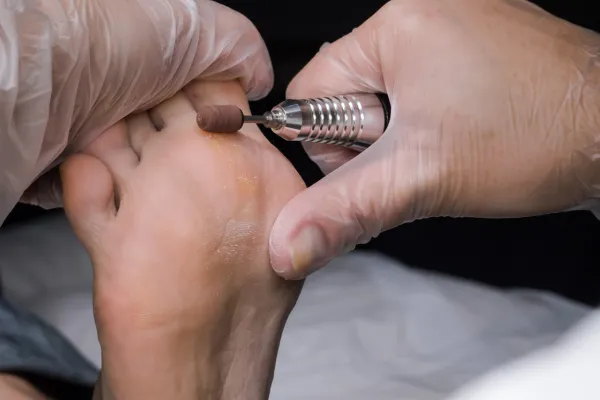
If you notice corns or calluses forming, gently file them with a pumice stone after soaking your feet, but avoid aggressive scraping that can cause injury.
Use protective pads to cushion vulnerable spots and reduce pressure.
And don’t hesitate to consult a podiatrist if pain persists or if you have conditions like diabetes.
Taking these steps helps you keep your feet healthy and free to roam wherever you want.
Conclusion
Now that you know what causes corns and calluses, you can take steps to prevent them by choosing proper footwear and using cushioning where needed. Remember, corns are small and often painful, while calluses are broader and less defined. Keep your feet clean and moisturized, and avoid excessive pressure or friction. If you experience persistent pain or discomfort, don’t hesitate to see a podiatry expert for the right treatment. Your feet will thank you!